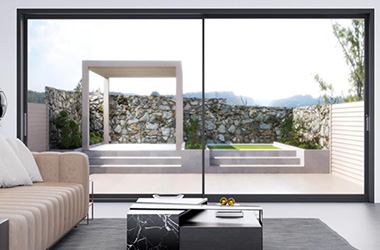
Singapore is one of the densest cities in the world — and the noise that comes with that density is inescapable. Living near the Pan Island Expressway or Ayer Rajah Expressway means a steady roar of traffic persists through the night. Homes within 300 metres of an MRT line experience low-frequency rumble during operating hours. Changi flight paths bring a daily rhythm of aircraft overhead. And in HDB blocks and high-rise condominiums, party walls and common corridors carry sound with uncomfortable clarity.
The weakest acoustic link in any residential envelope is almost always the glazing. Even a well-plastered concrete wall achieves a sound reduction index of 50–55 dB, but a standard single-pane window can perform as poorly as 25–28 dB. Upgrading to high-performance insulated glass units (IGUs) with the right specifications is the single most effective intervention a Singapore homeowner can make to reduce indoor noise levels. This guide explains the physics, the ratings you should know, the glass configurations that actually work, and how EZZO.SG products deliver measurable acoustic results.
How Sound Travels Through Windows and Doors
Sound is mechanical energy — a pressure wave propagating through a medium. When that wave strikes a window, it causes the glass pane to vibrate. Those vibrations re-radiate as sound on the other side of the glass, effectively "transmitting" the noise into your living space. The amount of energy that passes through depends on the mass of the glass, its stiffness, and how much energy is dissipated (absorbed or dampened) along the way.
There are three primary paths for sound to enter through a window system:
- Direct transmission through the glass pane — the dominant path in single-glazed windows. The glass vibrates in sympathy with incident sound waves.
- Flanking transmission through the frame — sound energy travels through the aluminium profile, bypassing the glass entirely. Thermal break profiles mitigate this significantly.
- Air leakage through gaps and seals — even a 1 mm gap can reduce effective acoustic performance by 10–15 dB. Precision gasket systems are essential.
Low-frequency sounds — the 63–250 Hz range that dominates MRT rumble, expressway noise, and aircraft approaches — are particularly difficult to attenuate because longer wavelengths transfer energy more efficiently through solid materials. This is why glass mass and interlayer damping matter so much for Singapore's specific noise environment.
What Is STC Rating and Why It Matters
Two acoustic rating systems are widely referenced for glazing:
- STC (Sound Transmission Class) — the standard used in the United States and widely referenced internationally. Higher numbers indicate better noise reduction. An STC of 40 means that 40 dB of noise is attenuated by the glass assembly.
- Rw (Weighted Sound Reduction Index) — the ISO 717-1 metric used in Europe, Australia, and increasingly in Singapore building specifications. Numerically very close to STC for most glass configurations; the two figures can be used interchangeably for practical planning purposes.
A 10-dB improvement sounds roughly half as loud to the human ear. Moving from STC 28 (single pane) to STC 38 (quality IGU) is the acoustic equivalent of cutting the perceived loudness of road noise in half.
Singapore's BCA (Building and Construction Authority) references SS EN ISO 717-1 for acoustic performance in residential buildings. The National Environmental Agency (NEA) and LTA both publish guidelines for acceptable interior noise levels. For residential spaces, a daytime limit of 65 dB(A) and a nighttime limit of 55 dB(A) for road traffic are commonly cited benchmarks. Achieving these figures near an expressway or MRT line requires glazing with an STC or Rw rating of at least 35–40, and often higher for the most exposed elevations.
How IGUs Block Noise — The Physics Explained
An insulated glass unit (IGU) is a factory-sealed assembly of two or more glass panes separated by a spacer bar, with the internal cavity either evacuated to low pressure or filled with a gas (typically argon). Each element in this assembly contributes to acoustic performance through distinct physical mechanisms.
Glass Mass
The mass law states that doubling the surface mass of a glass pane improves its sound transmission loss by approximately 6 dB. A 5 mm pane weighs about 12.5 kg/m²; moving to 6 mm adds roughly 15% more mass. While mass alone is not the most efficient route to acoustic performance, it forms the baseline from which other improvements build.
Air Gap Width and Decoupling
The gap between panes in a standard double-glazed IGU creates an acoustic decoupling effect — the two panes vibrate semi-independently, so the energy cannot transfer directly from one to the other. The optimal cavity width for sound insulation is different from that for thermal performance: a narrow 6–12 mm gap is excellent for heat conduction resistance, but a wider gap of 16–100 mm provides significantly better acoustic isolation at mid-to-high frequencies. EZZO.SG's 27 mm argon configuration (5mm+27Ar+5mm) is specifically chosen to push performance beyond the 12 mm standard used in entry-level IGUs.
However, all IGUs face a fundamental acoustic weakness: the "mass–spring–mass resonance" of the two glass panes with the gas cavity between them. At certain frequencies — typically in the 150–250 Hz range — the panes resonate in phase, and sound transmission actually increases. This is where the argon fill and asymmetric pane thickness help: argon's higher density relative to air shifts the resonance frequency lower, and using panes of unequal thickness (e.g., 5 mm and 6 mm) spreads the coincidence dip across a wider range rather than concentrating it at one frequency.
Laminated Interlayers
The most effective way to break the resonance problem entirely is to introduce a viscoelastic interlayer — polyvinyl butyral (PVB) — bonded between two glass plies to form laminated glass. PVB does not simply add mass; it converts mechanical vibration energy into heat through internal molecular friction. This damping effect is particularly powerful at the mid-frequency resonance dip that plagues standard IGUs, and it explains why acoustic laminated glass significantly outperforms single-glass of equivalent total thickness.
Standard IGU vs Acoustic Laminated IGU — Which Is Right for You?
Not every Singapore home needs the same level of acoustic treatment. The right configuration depends on your primary noise source, the floor you live on, and your overall acoustic goals.
Standard double-glazed IGU (5mm+12A+5mm or similar) delivers meaningful improvement over single glazing and is appropriate for homes on quieter residential roads. The argon fill reduces the thermal conductivity of the cavity while also providing modest acoustic benefit over air-filled units.
Wide-cavity argon IGU (EZZO's 5mm+27Ar+5mm) takes the decoupling advantage further. The 27 mm gap is large enough to break direct mass–spring coupling at most mid-frequency bands, making this configuration well-suited for homes within 500 m of expressways and MRT lines where broadband traffic noise is the primary concern.
Acoustic laminated IGU (EZZO's 5mm+22Ar+5mm+0.76pvb+5mm) combines the cavity decoupling of a wide gap with the damping properties of a PVB interlayer on the inner pane assembly. This configuration — sometimes called an "acoustic triple" — achieves STC ratings in the 42–46 range and is the appropriate specification for homes directly adjacent to the PIE, AYE, or CTE; properties below the Changi flight path; and high-floor condominiums where wind-borne traffic noise is amplified by reflection off nearby towers.
The Role of PVB Interlayers in Acoustic Performance
Polyvinyl butyral is best known as the safety interlayer that holds laminated glass together if it breaks — a critical requirement under Singapore's BCA glazing standards for glass used at height or in impact-prone locations. But its acoustic properties are equally significant.
Standard PVB (0.38 mm) is primarily a safety layer. Acoustic-grade PVB (0.76 mm and above) is formulated with a softer, more viscoelastic core that provides substantially more damping at the resonance frequencies where standard glass fails. The 0.76 mm PVB specified across EZZO.SG's acoustic configurations is the industry-standard acoustic grade, providing:
- Significantly improved attenuation in the 500 Hz–2000 Hz vocal range — the frequencies most disruptive to speech intelligibility and sleep quality
- A broad "damping plateau" that eliminates the sharp coincidence dip characteristic of monolithic glass
- Safety-glass certification, ensuring compliance with BCA Approved Document requirements for the use of glass in buildings
EZZO.SG's 5mm+0.76pvb+5mm laminated safety glass configuration — available as a standalone glazing option for interior applications, secondary glazing, or low-exposure shopfront use — delivers an STC of approximately 38–40 from a 10.76 mm total thickness, outperforming a standard 12 mm air-gap IGU at a substantially thinner overall profile.
All EZZO.SG acoustic glazing configurations use 0.76 mm acoustic-grade PVB, not the 0.38 mm safety-only grade. This distinction matters: at 0.38 mm, PVB contributes minimal additional acoustic performance over standard laminated glass.
IGU Specifications for Noise Control
The table below compares the five primary glazing configurations relevant to Singapore residential projects — from baseline single glazing through to EZZO.SG's full acoustic laminated IGU — against key performance metrics.
| Configuration | Total Thickness | STC / Rw (approx.) | Performance Rating | Best Suited For |
|---|---|---|---|---|
| 5 mm single pane | 5 mm | 26–28 dB | Legacy replacement only; not recommended for new installations near any noise source | |
| 5mm + 12A + 5mm (air) | 22 mm | 33–35 dB | Low-traffic residential streets; internal-facing units in high-rise developments | |
| 5mm + 27Ar + 5mm | 37 mm | 36–39 dB | Moderate MRT noise; secondary arterial roads; HDB units facing busy carparks | |
| 5mm + 0.76pvb + 5mm (laminated) | 10.76 mm | 38–40 dB | Interior partitions, skylights, secondary glazing; strong vocal-range damping | |
| 5mm + 22Ar + 5mm + 0.76pvb + 5mm | 42 mm | 42–46 dB | Expressway-adjacent homes (PIE, AYE, CTE, SLE); MRT-side elevations; Changi flight path; high-floor units with amplified noise |
STC values are approximations based on published data for comparable configurations. Actual in-situ performance will vary depending on frame airtightness, installation quality, and flanking transmission paths within the building structure. EZZO.SG's systems are designed and installed to maximise real-world acoustic performance, not just laboratory ratings.
How the Aluminium Frame Affects Sound Transmission
A high-specification acoustic IGU installed in a poor-quality frame will underperform significantly. The frame contributes to total system acoustic performance in two critical ways: structural damping and airtightness.
Multi-Chamber Profile and Structural Damping
All EZZO.SG window and door profiles are extruded from 6063-T5 aluminium alloy — a medium-strength alloy with excellent corrosion resistance, appropriate for Singapore's tropical-coastal environment. The multi-chamber cross-section of our profiles does more than provide thermal resistance. Each enclosed air chamber within the extrusion acts as a small resonance cavity with its own damping characteristics, and the dividing walls between chambers interrupt the direct transmission of structural vibration through the frame. This is why a multi-chamber profile consistently outperforms a simple single-wall extrusion in acoustic tests, even at identical wall thicknesses.
PA66 Nylon Thermal Break
Every EZZO.SG system profile incorporates a continuous PA66 nylon thermal break — two strips of glass-fibre-reinforced polyamide that mechanically decouple the inner and outer aluminium frame sections. Nylon's acoustic impedance is substantially different from aluminium's, which means sound energy propagating along the outer frame extrusion encounters a material boundary that reflects a significant portion of that energy rather than transmitting it. The result is measurable: thermal-break profiles typically achieve 3–5 dB better flanking attenuation than single-piece aluminium frames.
Compression Gaskets and Airtightness
EZZO.SG's casement window range (PRO110, E-120) and sliding door systems (E190, E127, TY120, TY150) use multi-point compression hardware and brush-seal or EPDM gasket systems that maintain consistent contact pressure around the full perimeter of the sash. Even a 1 mm air gap can reduce effective STC performance by 10–15 dB — effectively negating the investment in premium glass. Proper gasket compression is the most important installation variable in achieving the rated acoustic performance.
EZZO.SG Noise Reduction Solutions
EZZO.SG's product range is designed from the outset to support acoustic performance as one of eight core performance standards. Sound insulation is not an aftermarket add-on — it is engineered into every profile and glazing specification.
System Windows — PRO110 and E-120
The PRO110 and E-120 casement windows use outward-opening or tilt-and-turn hardware that compresses the frame gaskets with increasing force as the sash locks engage. This compression mechanism eliminates the acoustic gap that is structurally unavoidable in sliding window systems, making casement windows the preferred choice for any elevation with a demanding noise environment. Both models accommodate the full range of EZZO.SG glazing specifications, including the 42 mm acoustic laminated IGU configuration.
System Sliding Doors — E190, E127, TY120, TY150
Sliding doors present a greater acoustic challenge than casements due to the inherent clearance required for the sash to travel along its track. EZZO.SG's sliding door range addresses this with dual-brush and thermoplastic sealing systems at the sill and head tracks, and a multi-point locking mechanism on the E190 and TY150 models that pulls the sash against the frame seal when closed. For the most demanding acoustic requirements on sliding door elevations, the 5mm+27Ar+5mm argon IGU configuration provides an optimal balance of cavity width and overall sash weight.
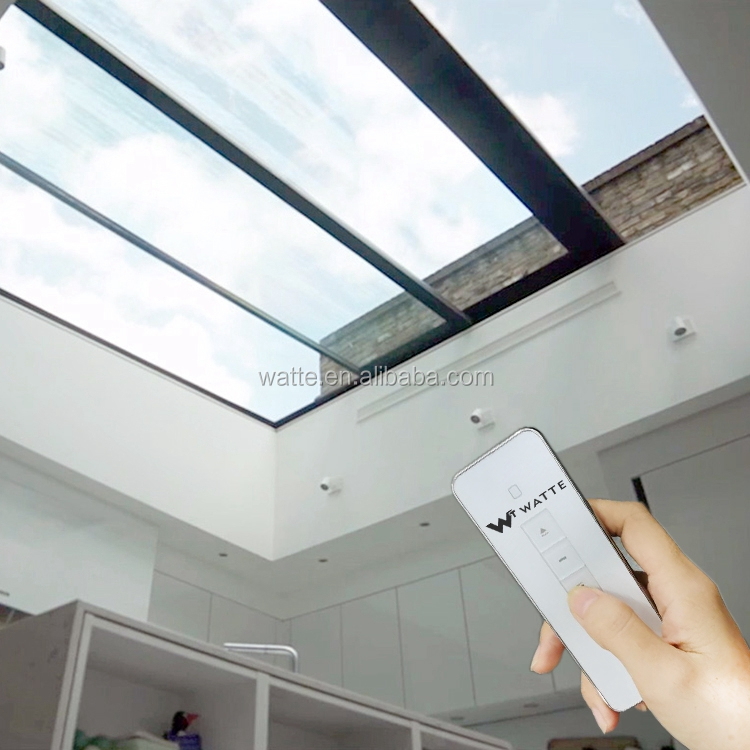
Skylights — SR-R30, SR-R90, SR-S110, SR-S85
Skylights are a frequently overlooked acoustic vulnerability in Singapore landed homes, particularly those under flight approach corridors or near expressways. EZZO.SG's skylight range supports all three IGU configurations including the 5mm+22Ar+5mm+0.76pvb+5mm acoustic build, which is particularly effective at attenuating the overhead component of aircraft noise — a mix of low-frequency engine noise and broadband aerodynamic turbulence that the laminated PVB interlayer handles exceptionally well.
What STC Rating Do You Need for Your Singapore Home?
Choosing the right specification starts with identifying your primary noise source and the NEA-referenced indoor target for your room type:
- Quiet residential road, no MRT: STC 33–35 is adequate. Standard 5mm+12A+5mm IGU performs well.
- Within 300 m of an MRT line (surface or elevated): Target STC 37–40. EZZO's 5mm+27Ar+5mm argon IGU is the minimum; upgrade to 5mm+0.76pvb+5mm laminated for bedrooms facing the track.
- Directly adjacent to PIE, AYE, CTE, or SLE: Target STC 40–45. The 5mm+22Ar+5mm+0.76pvb+5mm acoustic laminated IGU is strongly recommended for all exposed elevations, combined with casement windows rather than sliders for maximum seal compression.
- Changi flight path (east Singapore, Pasir Ris, Tampines, Bedok): Aircraft approach and departure noise is broadband with significant low-frequency content. STC 42+ with PVB lamination is the effective solution; the laminated inner pane specifically attenuates the 500–2000 Hz vocal frequencies most disruptive to sleep.
- HDB party wall noise, condo neighbours above/below: This is a structural flanking problem as much as a glazing problem. Upgrading windows will not address party-wall transmission, but it will eliminate the glazing as a contributor, allowing acoustic treatment to focus on the actual weak point.
The LTA's rapid transit expansion — including the Thomson-East Coast Line and future Cross Island Line — means that MRT noise exposure will increase for many Singapore homeowners over the next decade. Installing acoustic IGU systems now is an investment in long-term residential comfort regardless of current noise levels.
EZZO.SG offers a no-obligation site visit where our consultants can assess your specific noise environment, measure prevailing SPL (sound pressure levels) at key elevations, and recommend the appropriate glazing specification for each room. There is no one-size-fits-all answer — the right glass for a bedroom facing the PIE is different from the right glass for a living room looking onto a garden.
Quieter Living Starts with the Right Glass
Tell us about your home's noise environment and we'll recommend the right IGU specification — from our standard argon double-glaze to our full acoustic laminated build. No obligation, no sales pressure.